Our Blog

How many times a day should I floss?

December 22nd, 2021

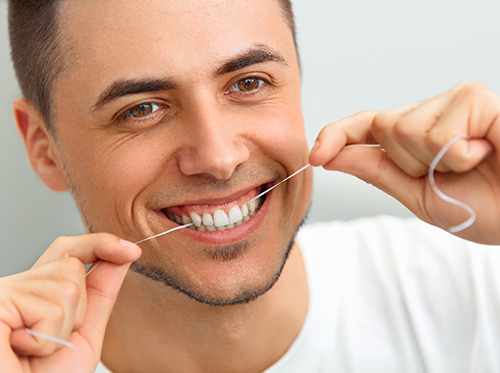
Flossing is one of the most important parts of your oral care routine. Many patients know they need to do it but find it difficult to fit into their busy lives. Well, here's the good news: flossing once a day is enough if you're doing a good job!

Some patients like to brush before they floss and others like to floss before they brush. Some like to floss in the morning when they have more energy, others like to floss at night so they can go to bed with a clean mouth. Don't get hung up on any of this, the important thing is that you floss and floss effectively no matter when you do it.

Effective flossing contributes to oral health in these ways:

  • It reduces the chance of cavities between teeth, since cavities can only form on teeth covered with dental plaque and you're scraping that plaque away when you floss.
  • Along with brushing, it reduces the amount of time the plaque is left on your teeth, allowing them to be in a state of healing and remineralization for longer.
  • It removes plaque that accumulates at or below the gum line, aiding in the prevention of gum disease.

As you can see, flossing offers many benefits for such a simple and inexpensive technique. So if you're still wondering how much to floss, don't worry about it. Don't mistake the frequency of your flossing with the effectiveness of it. Choose a dental floss that you like and one time during the day when you can floss thoroughly and just do it! If you need more tips on how to floss correctly, ask Dr. Taylor or any member of our Murray, KY team—we'd be glad to help you pick up this healthy habit!

Symptoms That Could Mean You Need a Root Canal

December 15th, 2021

Every tooth packs a lot of layers in a very small area. The outer, visible part of our tooth, the crown, is covered in protective enamel, and the lower root area is protected by a similar substance called cementum. Inside these very hard layers is dentin, a hard but more porous tissue which surrounds the pulp. In this central pulp chamber, we have the blood vessels which nourish the tooth and the nerves which send our bodies signals from the tooth. And if one of those signals is persistent tooth pain, you may need a procedure called a root canal.

There are a number of reasons that a tooth may cause you pain, including:

  • Fracture—a cracked or broken tooth can allow bacteria to enter the pulp chamber and cause inflammation and infection
  • Cavity—an untreated cavity can leave an opening where bacteria can reach the pulp of the tooth, and again lead to infection
  • Gum Disease—bacteria can attack from the root area of the tooth if gum disease has become serious
  • Injury—an accident or injury to a tooth can damage the nerve or the blood supply which nourishes the pulp
  • Abscess—if infection is left untreated, an abscess may form under the root

While a damaged tooth may sometimes be symptom-free, usually there are signs that the pulp has been injured or infected. What symptoms should lead you to give Dr. Taylor a call?

  • Persistent pain in the tooth
  • Long-lasting sensitivity to heat or cold
  • Gum tissue adjacent to the tooth that is sore, red or swollen
  • A cracked, broke, darkened or discolored tooth
  • A bump on your gums that persists or keeps recurring—this might indicate an abscess

A root canal is performed by a trained dentist or endodontist. After an anesthetic is used to numb the area, the damaged tissue, including pulp, blood vessels and nerves, is removed from the pulp chamber and each root. The inside of the tooth is then cleaned and shaped, and filled and sealed with a temporary filling. The tooth is filled again permanently, usually on a second visit, and might require a crown in order to protect it from further damage.

The most painful part of a root canal is far more often the time spent suffering before the procedure than the procedure itself. Delaying action when a root canal is necessary can lead to infection, abscess, and even tooth loss. If you experience any of the symptoms mentioned above, please give our Murray, KY office a call!


Should You Be Concerned about Your Child’s Bad Breath?

December 8th, 2021

The short answer to this question? Yes. Because your child’s breath is a reflection of his or her oral health, you should talk to Dr. Taylor if you notice any unpleasant changes. While better dental hygiene is usually the answer for young children, bad breath can also be a symptom of more serious problems.

Oral Hygiene

Most often, bad breath is simply a sign that your child needs a little help developing proper brushing and flossing habits.

  • Show your child how to use a soft-bristled brush that fits in the mouth comfortably, be sure to brush all the surfaces of each tooth, and don’t forget to angle toward the gum line. And brush long enough. Once all the baby teeth have arrived, two minutes of brushing is usually recommended for children.
  • It’s not too early to floss! Adults need to handle the flossing duties for children until they can manage on their own, so it’s a perfect time to teach technique. And, just like toothbrushes, floss should be flexible and soft.
  • Don’t forget the tongue. Our tongues harbor the bacteria that cause bad breath, so finish off your child’s routine with a gentle brush of the tongue.

Better oral habits mean not only fresh breath, but give those baby teeth the best chance of staying healthy until they are naturally replaced by adult teeth. After all, baby teeth not only help your child learn to eat and speak properly, but they act as necessary placeholders so the permanent teeth are able to erupt in exactly the right spot.

Talk to a member of our Murray, KY office team at your child’s next appointment if you are concerned about oral hygiene–they have many great suggestions for making brushing and flossing more efficient, comfortable, and even fun for your child.

‘Tis the Season—for Healthy Dental Choices!

December 1st, 2021

It might be the most wonderful time of the year, but if you’re dashing through the snow to an emergency dental appointment, you’re not feeling very jolly. And post-holiday, no one wants to start off their New Year’s Resolutions with “Get Cavities Filled.” How to survive the sweetest of seasons with enamel and fillings intact?

Candies and sweets would normally be on the naughty list, but we’re not Scrooges! Indulging in a treat or two is part of the holiday fun, and we have some advice for how to enjoy them guilt-free. But first, some treats are definitely more naughty than nice. Which are the ones that are better as decorations than desserts?

  • Candy Canes

If you’ve ever suffered a chipped or cracked tooth after an innocently biting down on a much-harder-than-expected piece of candy, you know that caution is in order. That’s why we tend to take our time with candy canes, letting them dissolve slowly in the mouth. Of course, the drawback to this strategy is that now we’re slowly bathing our teeth in sugar, encouraging the growth of plaque and cavity-causing bacteria.

Candy canes, peppermints, and other hard candies are potentially bad for your teeth when you crunch away, and definitely bad for your teeth if you let them dissolve slowly.

  • Gumdrops

Glistening, colorful gumdrops. Roofing your gingerbread house, trimming a gumdrop tree, or simply sitting in a bowl, they are one of the sweetest ways to decorate for the holidays. And when we say “sweet,” we mean that literally. Most gumdrops are basically made of corn syrup and sugar—and then rolled in more sugar.

But their sugar content isn’t the only problem. This is sugar in an extra-gummy form that sticks between our teeth and around our gums.

  • Toffees, Caramels, Taffy

They might come in lovely ribboned boxes, but these extremely sticky foods are not a gift to your teeth.

Not only do chewy candies stick to enamel, they stick to fillings, crowns (especially temporary crowns), and orthodontic wires and brackets. No one wants an unexpected trip to the dentist or orthodontist because dental work has been damaged or dislodged!

  • Gingerbread Houses

Nothing says the holidays like a gingerbread house—chewy, sticky gingerbread covered with hard sugar icing, gumdrops, and peppermints. Great for your décor; not so great for your dental health. Eat one gingerbread man if you’re in a spicy mood and leave your architectural masterpiece intact.

  • Fruitcake

If you need an excuse to turn down fruitcake, here’s a perfect one: most fruitcake is not great for your teeth. Candied fruit is, well, candied, and dried fruit is sugary, sticky, and chewy. There are delicious exceptions, of course, but even a delicious fruitcake is very high in sugar.

Well, this list wasn’t very jolly. So as a little holiday gift for you, here are some suggestions to help you enjoy your desserts in the healthiest way possible.

  • Be choosy.

Just like you search for the perfect presents for your family and friends, take the time to choose the perfect holiday treats for yourself. If you are worried about cavities, or have a temporary crown, or wear braces, or have cracked a tooth before, or are just generally concerned with your oral health, stay away from sticky, hard, and excessively sugary desserts.

What can you accept from your holiday hosts with a grateful (and relieved) smile? The occasional soft chocolate should be nothing to stress about—and if you make it dark chocolate, you’ll actually get nutritional bonuses like magnesium and antioxidants. Cakes, cupcakes, cookies, pies—yes, they are made with lots of sugar, but it is the holidays after all. Just be sure to follow our next suggestions to make that slice of cheesecake guilt-free.

  • Eat sweets with a meal.

Saliva does more than keep our mouths from getting dry. It also helps prevent cavities by washing away food particles and neutralizing the acids from food and bacteria, which damage enamel.

Eat dessert with a meal, and you benefit from increased mealtime saliva production. When you snack throughout the day, this acid-neutralizing ability is greatly reduced.

  • Rinse after eating.

Rinsing your mouth with water after a meal or a snack, especially a sugary one, also helps wash away the sticky sugars and carbs, which oral bacteria convert into acids.

  • Brush immediately. (Maybe.)

It’s always a good idea to brush right after eating—well, almost always. If you’ve been eating acidic foods like citrus or colas, the acids in the food can weaken your enamel just enough to cause some potential enamel damage if you scour your teeth immediately after eating. We often recommend waiting about 30 minutes to brush to give your enamel a chance to recover.

But every mouth is different. If you wear braces, or tend to get food stuck in your teeth or dental work, or have any other concerns, ask Dr. Taylor for the best times and methods for holiday brushing.

You don’t want to ho-ho-hope that we can fit you in at our Murray, KY office to treat a cavity or a cracked tooth. Make your holiday dessert list and check it twice, and make sure you’re brushing and flossing more often if you’re indulging in seasonal treats—give yourself these two gifts, and you’ll be ringing in the New Year with a beautiful, healthy smile. Sweet!

American Dental Association Kentucky Dental Association Murray State University
700 Whitnell Ave, Murray, KY 42071
(270) 753-9201